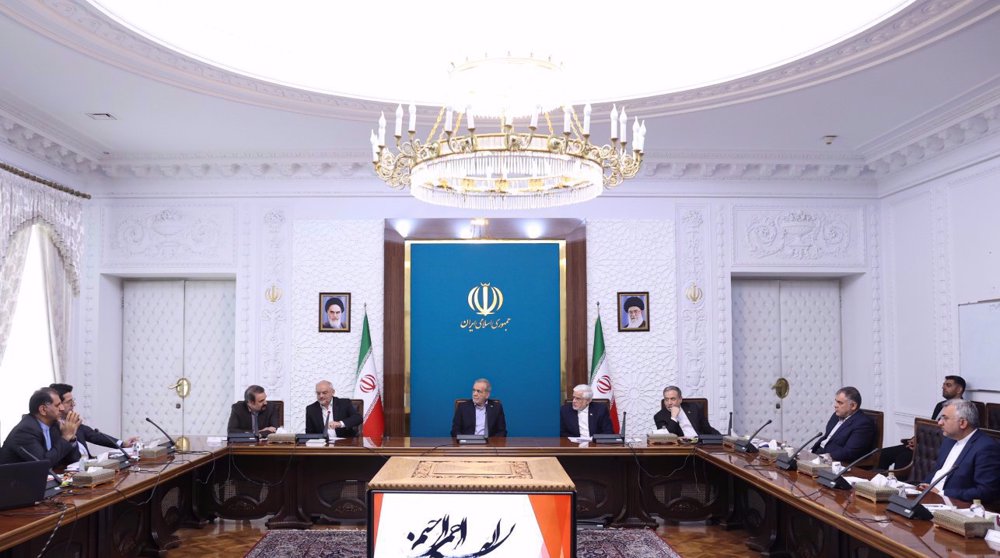
President Masoud Pezeshkian has voiced Iran’s readiness for “serious and constructive” cooperation with China, particularly within the framework of Beijing’s Belt and Road Initiative (BRI), ahead of his planned visit to China later this month.
Again, you are confusing a country having industrial policy and some level of capital control, which I remind you, that exist in many countries in the world today, as being not neoliberal.
No, I’m talking about a country where the biggest companies and the banking sector and land are owned by the state. I’m talking about a country like this:
State-owned enterprises accounted for over 60% of China’s market capitalization in 2019[4] and estimates suggest that they generated about 23-28% of China’s GDP in 2017 and employ between 5% and 16% of the workforce.
Neoliberalism is first and foremost about privatization. After that it is about deregulation. It is not about the college an economic advisor went to or who their professor was a student of. None of the processes that have historically defined neoliberalism are dominant in the actual Chinese economy. China’s economy is probably the least neoliberal on earth outside of the other four ML states.
“SOE” is an economist weasel word, it covers everything from a soviet factory to a public corp handling contracts for 90% privatized services in post soviet countries. there isn’t even a percent of public ownership that makes an SOE an SOE.
Not saying Chinese SOEs function a specific way, but simply having them doesn’t pass muster imo, we need to interrogate the characteristics of them to actually know if they’re neoliberal or not.

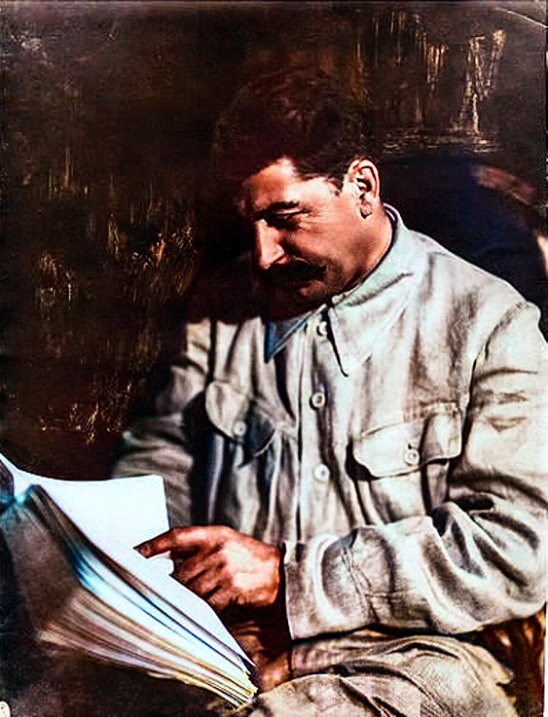
No, I’m talking about a country where the biggest companies and the banking sector and land are owned by the state. I’m talking about a country like this:
Neoliberalism is first and foremost about privatization. After that it is about deregulation. It is not about the college an economic advisor went to or who their professor was a student of. None of the processes that have historically defined neoliberalism are dominant in the actual Chinese economy. China’s economy is probably the least neoliberal on earth outside of the other four ML states.
“SOE” is an economist weasel word, it covers everything from a soviet factory to a public corp handling contracts for 90% privatized services in post soviet countries. there isn’t even a percent of public ownership that makes an SOE an SOE.
Not saying Chinese SOEs function a specific way, but simply having them doesn’t pass muster imo, we need to interrogate the characteristics of them to actually know if they’re neoliberal or not.