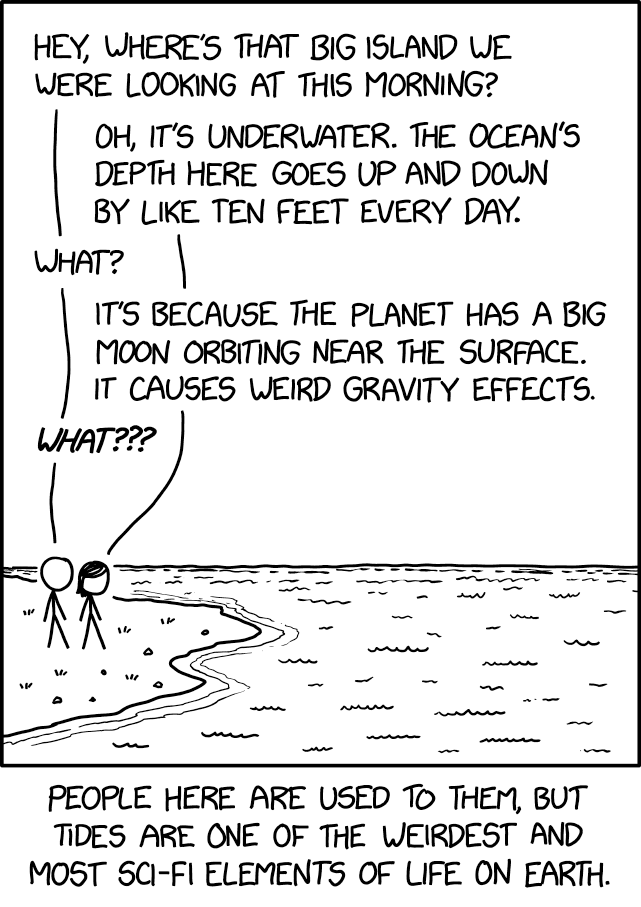
gandalf_der_12te@discuss.tchncs.de to Science Memes@mander.xyzEnglish · 13 days agoSea Levelimgs.xkcd.comimagemessage-square174linkfedilinkarrow-up11.55Karrow-down16file-text
arrow-up11.55Karrow-down1imageSea Levelimgs.xkcd.comgandalf_der_12te@discuss.tchncs.de to Science Memes@mander.xyzEnglish · 13 days agomessage-square174linkfedilinkfile-text
minus-squareSheldan@lemmy.worldlinkfedilinkEnglisharrow-up9·12 days agoHow does having a moon and the tilted axis contribute to evolution?
minus-squarew3dd1e@lemmy.ziplinkfedilinkEnglisharrow-up6·12 days agoThere are a few reasons but I kind of think it boils down to biodiversity. Seasonal changes, tides, light exposure, and varying temperatures would affect the balance of diverse life. For example, Earth didn’t always have oxygen. 2.4 billion years ago there was a bunch of microbial photosynthesis happening. Seasons and the tides affect ocean currents which moved nutrients around, allowing the bacteria to thrive and grow. Ozone’s formula is O3, so the Ozone layer wouldn’t have formed either. There are also other issues like how the seasons affect biological migration or how the moon slows the Earth’s rotation to about 24 hours/day.
minus-squareKnock_Knock_Lemmy_In@lemmy.worldlinkfedilinkEnglisharrow-up4·12 days agoSeasons add variability, which helps select life that is adaptable and less likely to be wiped out. Moon keeps the ocean moving, circulating the oxygen and nutrients.
minus-squareSheldan@lemmy.worldlinkfedilinkEnglisharrow-up4·12 days agoThank you for the explanation.


How does having a moon and the tilted axis contribute to evolution?
There are a few reasons but I kind of think it boils down to biodiversity. Seasonal changes, tides, light exposure, and varying temperatures would affect the balance of diverse life.
For example, Earth didn’t always have oxygen. 2.4 billion years ago there was a bunch of microbial photosynthesis happening. Seasons and the tides affect ocean currents which moved nutrients around, allowing the bacteria to thrive and grow.
Ozone’s formula is O3, so the Ozone layer wouldn’t have formed either.
There are also other issues like how the seasons affect biological migration or how the moon slows the Earth’s rotation to about 24 hours/day.
Seasons add variability, which helps select life that is adaptable and less likely to be wiped out.
Moon keeps the ocean moving, circulating the oxygen and nutrients.
Thank you for the explanation.