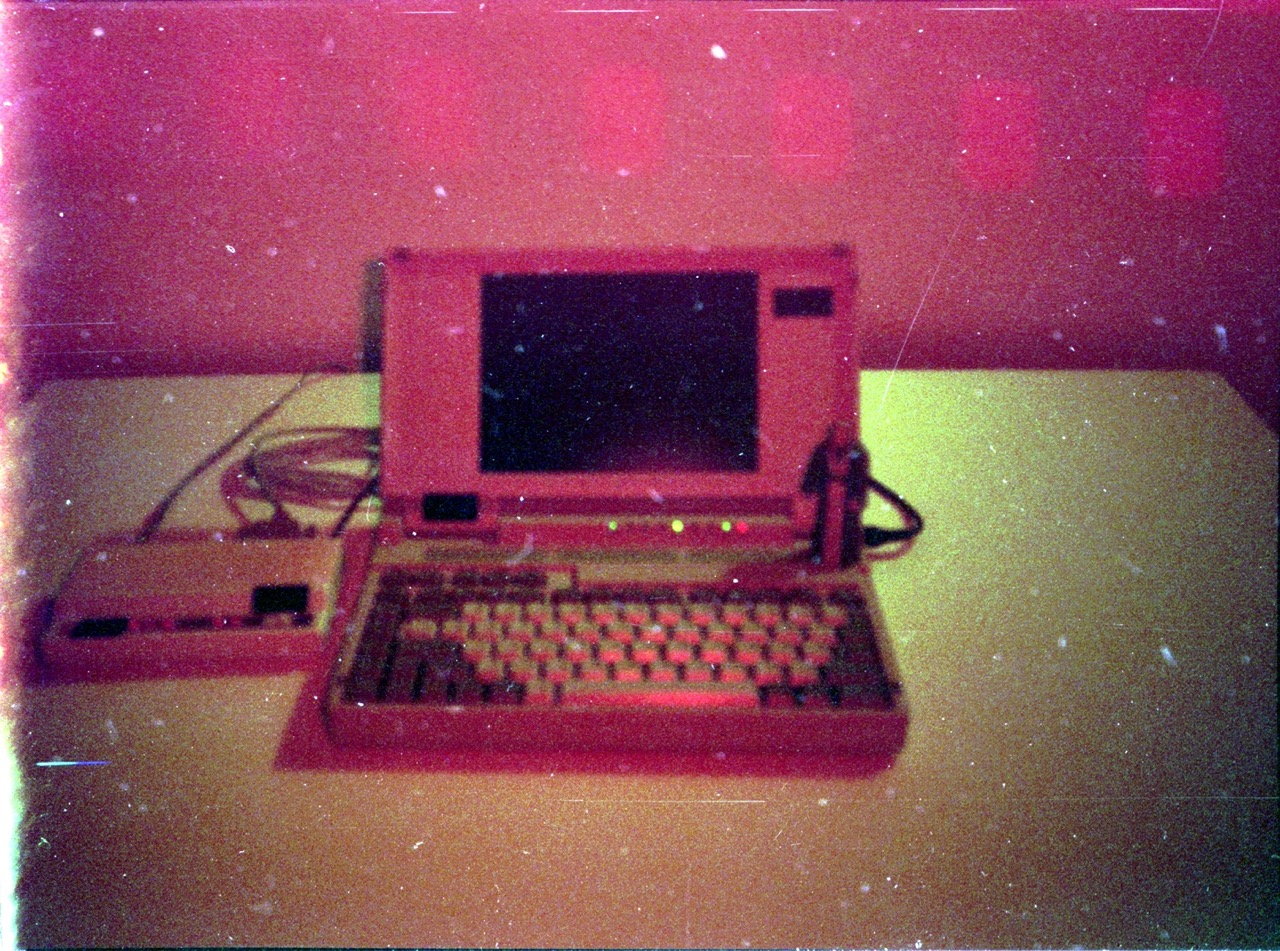

Remember, this was way before Windows.
it’s 1994
Windows 3.1 came out in 1992. Yes you still were in DOS a lot back then, but it was hardly “way before windows”.
Speaking of just hunting for random stuff in DOS, my personal favorite “what’s this?” in DOS was Gorillas.bas https://en.wikipedia.org/wiki/Gorillas_(video_game)?wprov=sfti1
Discovering that game as a child is how I learned to code BASIC. I would change all kinds of values to make the game act crazy, colors, etc.
I’m pretty sure I still have Gorillas on my HDD, carried with me from my families 286.
Yeah, Gorillas was awesome … came with MSDos 6 IIRC
deleted by creator
I agree, but Windows 3.x was more a shell on top of MSDOS and had a more niche market, and windows 95 didn’t get most popular OS until late 1998. So for a lot of people that was way before windows. Also tech went a lot faster back then. Updates to an old system isn’t as important if it’s not connected to the world of online hackers.
Windows 95 was also a shell on top of MSDOS. Windows NT wasn’t running on top of DOS, but it was primarily for business use until Windows XP.
This is a common misconception, and it’s funny that people still believe it all these years later.
While it’s true that Windows 95 relied on MS-DOS for bootstrapping and provided a DOS-like interface for running legacy applications, it wasn’t “just a shell” on top of DOS. Windows 95 introduced a 32-bit multitasking environment, a completely new user interface, and a separate set of APIs for software development (Win32). It had its own kernel that provided services like memory management and hardware abstraction, separate from DOS.
The integration with DOS was mainly for backward compatibility, allowing users to run older software. But once you were in the Windows 95 environment, DOS was essentially sidelined, and Windows 95’s own features and architecture took over.
Exactly, here’s the canonical The Old New Thing post on the topic. https://devblogs.microsoft.com/oldnewthing/20071224-00/?p=24063
tldr:
“MS-DOS served two purposes in Windows 95: It served as the boot loader. It acted as the 16-bit legacy device driver layer.”“Among other things those drivers did was “suck the brains out of MS-DOS,” transfer all that state to the 32-bit file system manager, and then shut off MS-DOS.”
Drivespace was what enabled me to play Baldurs Gate 1 back in the day. My specs back then:
- 32MB RAM
- Pentium166 MMX
- 500ish MB drive (My 2GB went bust, so I used an old spare drive for quite a while)
- 16X CDROM
- 2X CD Burner… yarr, that made me a lot of money
- 3dFX Voodoo2 8MB coupled with an ATI Rage Pro
- Soundblaster Live
wooo, look at mr high end over here :-)
640kb RAM 2 x 512 floppies CGA green screen / monochrome
That wasn’t my first PC, just the one on which I played BG1 and used drivespace. My 1st PC was more like the generation after yours. 386 of some sort, 2x 3.5" floppies, and a whooping 43MB harddisk.
Sounds similar to my 2nd. 386SX with 20mb hd. 4mb RAM. She was a beast.
deleted by creator
Between this and RAMDOUBLER my PC was
unstableunstoppable! ;-)And then the Internet happened and we could freely download as much ram as we wanted to!
I used the proprietary predecessor, Stacker.
It was pretty magical. It turned my 40 MB hard drive into a (seemingly) 80 MB hard drive.
I don’t remember there being a significant performance penalty, because it was presumably overshadowed by the relatively (compared to processor speed) slow disk speeds.
Both times I used either one of them, it crashed in the middle of compressing my hard drive and I had to reformat. But they worked fine the 2nd try!
Stacker was the one I used also. It really did work
The idea is still around! Apple’s APFS file system (and HFS+in its later days) support sort-of transparent compression, and on all its platforms most system files - the ones that don’t change much - are compressed to save space for user files. There’s surprisingly little documentation about this.
There’s a third party tool you can use to compress files yourself: https://github.com/RJVB/afsctool
It looks like the technical details are in this pdf: https://developer.apple.com/support/downloads/Apple-File-System-Reference.pdf
Btrfs has compression as well. It compressed my root partition to a third of it’s size. It helps out with some games as well, but they usually are not as compressible. The performance impact is pretty minimal as long as you don’t set the compression level excessively high.
This was the nerdiest “Choose your adventure” rpg but it was a fun read.
Laughs in PKUNZIP.EXE
wow, that was a blast from the past… thank you
Stacker, then MS ripped off Stacker and made Doublespace, got sued and changed the compression algorithm and renamed it DriveSpace.
Couldn’t use DoubleSpace or Stacker with Windows 3.X, there was no 32bit driver so disk access was horrendously slow. Windows95 was needed to use DriveSpace with full driver support, but it was still slow and by that time hard drives had caught up with the growing size of the OS and applications somewhat and live disk compression lost popularity, particularly with the way DriveSpace did it. Storing your entire drive as a single giant file backed by FAT32 was a terrible idea and prone to corruption.
When NTFS came around and introduced transparent file compression, that pretty much ended DriveSpace style compression. All modern FS now include some kind of compression, NTFS, APFS, BTRFS, ZFS. Even HFS+ had some ability to compress similar to APFS, but wasn’t very well known.
Which came first, DriveSpace or Norton Speed Disk? I thought Norton was first.
I believe so yes
Different tools. Speed disk was a disk defragmenter, DriveSpace was whole disk compression. The Norton tool you’d have used a lot if you used DriveSpace was Norton Disk Doctor.
Didn’t speed disk do an optimised defragment operation, putting OS files at the start of the drive etc

But look at that estimation screen! Again, rant all you wish, Microsoft knew how to handle a long running task even back in MS-DOS days. In this case, it’s estimated at 46 minutes. Great!
Meanwhile, today it’s often just “beachball!”. It’s become a bit of a lost art.
on my old Windows 95 laptop I used the drive compression to create a partition to put some games on it, worked pretty well
deleted by creator