

deleted by creator
RISC-V
deleted by creator
What do you mean? It is a delight to program a riscv chip (compared to the bag of legacy of x86)
deleted by creator
I have very mixed feelings about RISC-V since the non-profit organization moved their headquarters to Switzerland after taking a bunch of US tax dollars and grants to develop it at UC Berkeley.
With how things are going in the US right now. I’m not mad about people moving certain groups out of the country. I’m sad, but not mad.
Note: I know the reason they moved to Switzerland is unrelated.
It’s an open source platform: if an american company makes and arm device, they need to pay tax to a British company. RiscV require not to pay IP tax to any foreign country.
Also, it’s not like “they move”: stuck there in the US, they would simply shut it down. So I don’t see how your tax money went in better use.
You clearly haven’t been to the us in a very long time
Good news! On the firmware side there is some serius work being done to support it!
https://www.basicinputoutput.com/2025/01/amd-opensil.html?m=1 is AMDs work to opensource hardware intialzation
https://opensourcefirmware.foundation/projects/ Has a good list of mostly BIOS/UEFI replacements.
Idk about memory, Usb, sata or PCIe controllers though. (something else?)
deleted by creator
If that was an option I’d still be rocking my i7 920 with tri channel ram. That sucker could take anything I threw at it until the mobo started dying in 2021.
The only new mobos I’ve found with an lga1366 are dual socket server boards.
Had my i7-920 for 11 years. Started with 6 GB RAM and updated to 12 GB later. Went though 4 GPUs (just upgrading, none died). Changed from HDD to The machine was still going when I replaced it with a Ryzen a few years back.
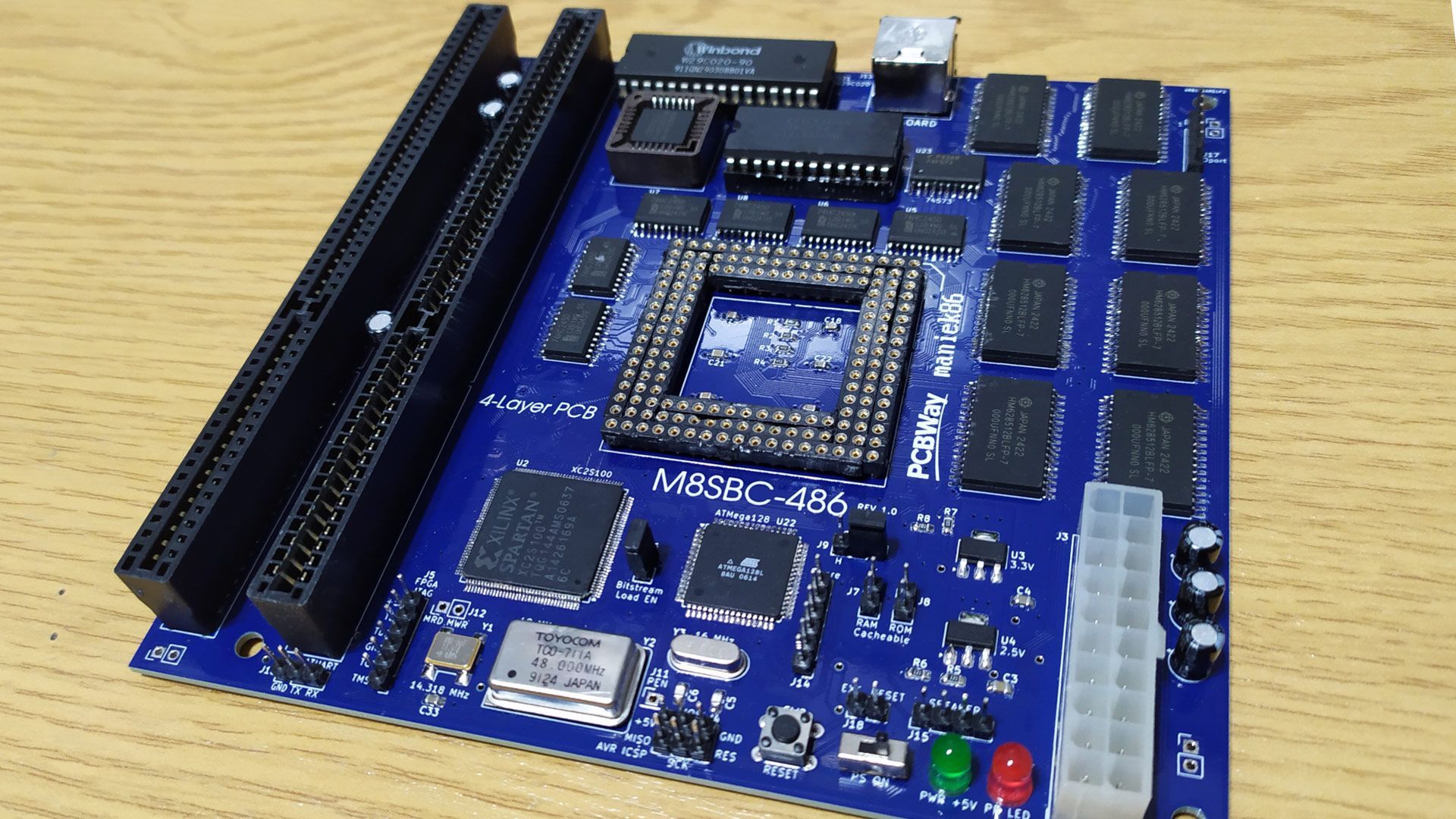
This looks really cool, but I have immediate concerns about the lack of ZIF socket for something designed to take 30 year old chips.
The chip shortage makes people take desperate measures.
Could I make RAM modules using breadboards? 🤔
Ignoring signal integrity issues like noise, switching speed, impacts of resistance and capacitance compared to PCB and soldering, yes you could make a memory module that operates at slow speeds using a bread board. I think most hardware engineering students would have wired up memory chips on a breadboard (my school did anyway for applying memory mapped hardware), granted those weren’t to any particular PC spec.
Before you think “why doesn’t someone make open source PCB for modern RAM to help the shortage”, the shortage issue is with the memory chips that go on the PCBs, not the boards themselves. What this does mean is that someone could in theory find cheap broken memory modules and combine their working parts to make good memory modules.
Yes, but you could also make your own chips


